
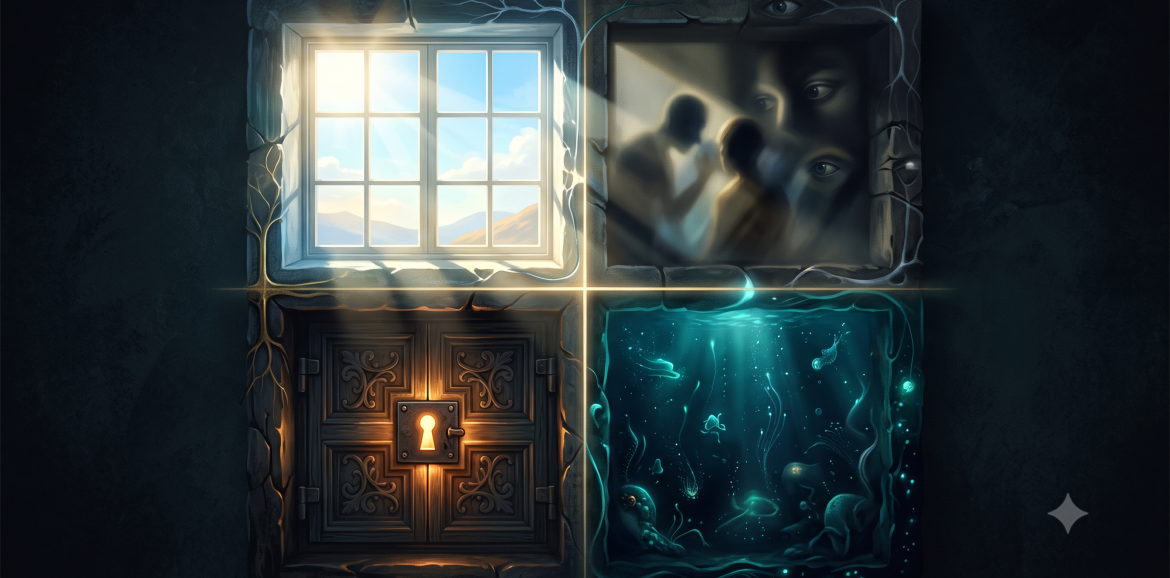
Have you ever looked at someone—a partner, a parent, or even a celebrated icon under the global spotlight—and wondered, “What are they carrying that I will never know?”
It is one of the most haunting dimensions of the human experience. As the famous old adage goes, there are some secrets and truths that people take with them into the grave, forever locked away from the rest of the world.
Whether we are parsing the unresolved, deeply complex narratives of pop-culture legends like Michael Jackson (as explored in the evocative documentary Michael Jackson: The Verdict in Netflix), or analyzing the psychological ambiguity of literary masterpieces like Sankar’s classic Bengali novel Attosanman (which famously inspired a gripping Bollywood adaptation), we are constantly drawn to the same chilling question mark: Where does the truth go when a mind refuses to speak?
To understand why the human mind is capable of harboring secrets so deep they seem to defy gravity, we have to travel beyond cultural verdicts and courtroom drama. We must look into the deep, mysterious architecture of human psychology and neuroscience.
1. The Anatomy of the Hidden Self: The Johari Window
To map the boundaries of what we share and what we conceal, psychologists often use a cognitive model called the Johari Window. Invented by Joseph Luft and Harry Ingham in 1955, this 2×2 grid maps human awareness into four distinct quadrants:
                  KNOWN TO SELF          UNKNOWN TO SELF
              +--------------------+--------------------+
              |                    |                    |
   KNOWN TO   |     OPEN AREA      |     BLIND SPOT     |
    OTHERS    |   (Public Self)    |   (Unconscious)    |
              |                    |                    |
              +--------------------+--------------------+
              |                    |                    |
  UNKNOWN TO  |    HIDDEN AREA     |    UNKNOWN AREA    |
    OTHERS    |   (Private Self)   |   (The Deep Grave) |
              |                    |                    |
              +--------------------+--------------------+
- The Open Area: What you know about yourself, and what others know about you (your public persona).
- The Blind Spot: What others perceive about you, but you remain blind to.
- The Hidden Area: What you consciously know about yourself but deliberately hide from the world (your private vault of secrets).
- The Unknown Area: The deepest, most mysterious quadrant. These are the truths, impulses, and buried traumas that are unknown to others and inaccessible to your own conscious mind.
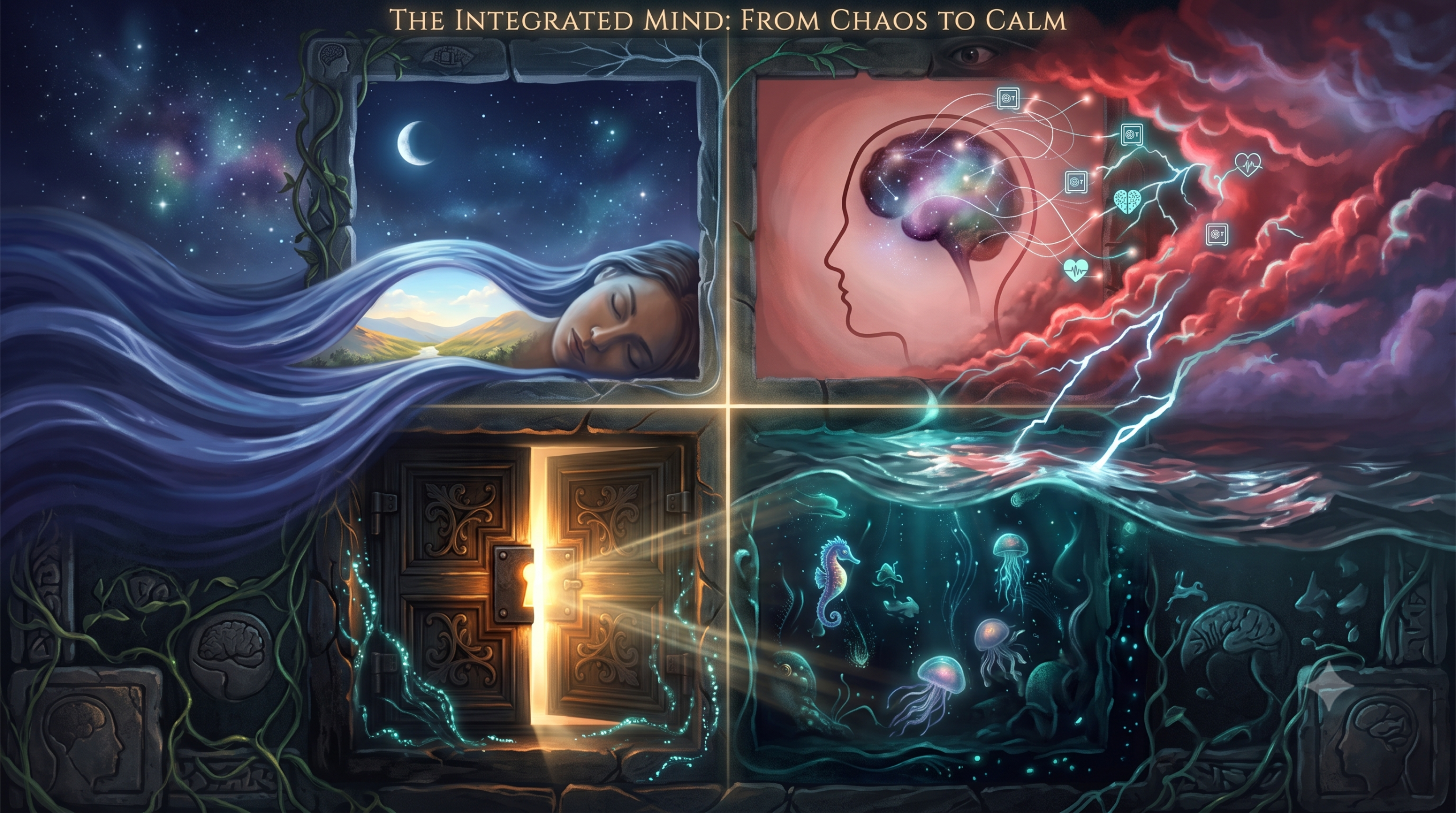
When an author or filmmaker leaves a story with an agonizing, open-ended question mark, they are operating in the Hidden and Unknown areas. To survive in a world that demands conformity, human beings become master compartmentalizers. We build thick, internal walls, separating our public-facing egos from our private truths.
Sometimes, these walls are so high and heavily guarded that we don’t just hide our secrets from others—we hide them from ourselves.
2. The Neuroscience of a Secret: How the Brain Encodes Trauma
What happens in the physical brain when we experience something so shocking, shameful, or traumatic that we lock it away?
Under normal circumstances, memory creation is a collaborative process. When you experience a pleasant day at the park, your Hippocampus (the brain’s librarian) organizes the events, applies a chronological time-stamp, and seamlessly transfers the narrative to the Cerebral Cortex (long-term storage). Meanwhile, your Prefrontal Cortex (the executive leader) helps you logically make sense of the event.
But when trauma strikes, this system gets hijacked:
- The Amygdala Hijack: Your brain’s threat detector, the amygdala, goes into overdrive. It floods your body with adrenaline and cortisol (stress hormones).
- The Librarian Goes Offline: This toxic chemical flood temporarily shuts down the hippocampus. It can no longer apply a chronological time-stamp.
- Fragmented Storage: Instead of being filed away as a neat, historical story, the memory is shattered. Raw sensory fragments—a specific smell, a tone of voice, a wave of terror—are seared directly into the emotional centers of the brain without context.
This is the birth of a deeply guarded secret or unintegrated trauma. Because the memory was never properly processed by the hippocampus, the brain doesn’t realize the event is in the past. To the amygdala, the threat is still actively happening.
To survive the day-to-day, the brain must actively suppress these memories. The lateral Prefrontal Cortex steps in like a heavy brake pedal, working tirelessly to block the hippocampus from retrieving the painful memory network. This constant suppression requires massive cognitive energy, often manifesting as chronic anxiety, hypervigilance, or profound emotional numbness.
3. Why We Can’t “Sleep It Off”: The Sleep Cycle Breakdown
Naturally, the brain has an overnight janitorial service designed to clean up this emotional clutter: sleep.
During a healthy night’s sleep, your brain cycles through Deep Sleep (Slow-Wave Sleep) and REM (Rapid Eye Movement) Sleep.
- In Deep Sleep: The hippocampus replays the day’s events, slowly transferring them to the cortex.
- In REM Sleep: Your brain does something miraculous. It completely shuts off noradrenaline (the brain’s version of adrenaline). REM is the only time your brain is entirely free of stress chemicals. This allows you to dream about your experiences, safely processing the emotions and stripping away the painful “charge.” You wake up remembering the event, but the emotional sting is gone.
+-----------------------------------------------------------------+
|                    NORMAL SLEEP CYCLE                           |
|  [Event] -> [Deep Sleep: Transfer] -> [REM: Strip Stress]       |
|  = Healthy Past Memory                                          |
+-----------------------------------------------------------------+
|                    TRAUMA SLEEP CYCLE                           |
|  [Trauma] -> [Deep Sleep: Broken] -> [REM: Adrenaline Spikes]   |
|  = Nightmares / Unconsolidated Memory                           |
+-----------------------------------------------------------------+
However, when a memory is tied to a profound secret, heavy shame, or terror, this nightly system crashes.
In a traumatized or highly guarded brain, noradrenaline fails to drop to zero during REM. When the brain attempts to process the memory in your dreams, the stress chemicals spike. Your heart races, your blood pressure climbs, and you wake up gasping from a nightmare.
Because the cycle is aborted, the memory remains “frozen in time”—raw, emotional, and completely unconsolidated.
4. Unlocking the Vault: How EMDR Mimics REM to Heal the Brain
For decades, traditional talk therapy struggled to unlock these deeply buried trauma vaults because language lives in the logical left hemisphere, while trauma is trapped in the emotional, non-verbal right hemisphere.
This is where EMDR (Eye Movement Desensitization and Reprocessing) revolutionized psychotherapy by mimicking the brain’s natural overnight healing cycle while awake.

Through Bilateral Stimulation (BLS)—usually side-to-side eye movements or alternating visual cues—EMDR accomplishes three powerful things:
- Reconnecting the Brain’s Hemispheres: The alternating left-right stimulation forces both hemispheres to communicate, creating a bridge for the logical left brain to help process the emotional trauma stuck on the right.
- Activating the Orienting Reflex: As your eyes track a left-to-right movement, your brain scans for danger. Because you are in a safe room, a powerful “safety” signal is sent to your amygdala, artificially forcing your stress hormones to drop—recreating the safe, low-adrenaline state of REM sleep.
- Overloading Working Memory: By focusing on the eye movements while simultaneously holding the painful memory in your mind, your working memory becomes overloaded. This naturally dulls the vividness and emotional pain of the memory.
Slowly, the hippocampus can finally do its job. It time-stamps the memory, strips away the visceral terror, and files it away as history. The secret is no longer a radioactive threat; it becomes a closed chapter.
Conclusion: The Quiet Peace of an Integrated Mind
We may never know the absolute truth behind the enigmatic lives of figures like Michael Jackson, nor will we ever solve the quiet tragedies of characters like those in Attosanman. Some secrets are indeed taken to the grave, protected by the mind’s fierce, protective walls.
But for those of us living in the present, carrying our own hidden vaults, neuroscience offers a beautiful message of hope. You do not have to remain a prisoner to your brain’s protective defenses. By understanding how our brains encode, store, and process our deepest pains, we can begin the gentle work of opening the vault—not to expose ourselves, but to finally allow our minds to integrate, heal, and find peace.
What are your thoughts?
Do you believe some secrets are better left untranslated? How do you manage the “hidden areas” of your own life? Let’s start a conversation in the comments below!